
Getting someone out: $80–$180
Standard Sydney call-out for after-hours attendance. Ask before booking, not after the invoice.
Genuine round-the-clock cover across Kirrawee. You get an honest ETA rather than a flattering one, a fixed price before work starts, and on the calls that can safely wait, you get told that too.
The honest test is whether it is still getting worse while you wait. Water, waste or gas going somewhere it should not, and not stopping. A burst pipe, sewage backing up into the shower, a hot water tank emptying through the ceiling, or any smell of gas: those are emergencies, and waiting until morning multiplies the damage bill.
Then there is the category people apologise for calling about: the only toilet in the house blocked, no hot water with a newborn, a drain backing up the night before an inspection. Call anyway. An after-hours call here reaches a plumber, not a promise of one tomorrow.


Some homes of this vintage still run original galvanised steel water pipe. It corrodes from the inside, so the warning signs arrive gradually: pressure fading over years, rusty water after a holiday, hot flow noticeably worse than cold.
The emergency version is a section finally giving way. Isolating at the meter is the immediate answer, and the longer conversation is whether the run is worth repairing or replacing, which is a daylight decision.
It is not only drainage. Reactive soil moves water service lines too, and a pipe that has been flexed for years can let go without warning, usually at a fitting rather than mid-length.
For that one the first move is yours and it matters more than anything we do: find the water meter at the front boundary and turn the valve clockwise. The flooding stops while the van is still driving.
Most homes around Kirrawee have an overflow gully outside — a low grate, often near the back step, that nobody thinks about until it matters. It is deliberately set below the lowest fixture indoors so that when the line blocks, it spills into the garden instead of through your floor.
Heavy rain sheets off roofs, roads and the rail corridor faster than older pits can cope, backing up stormwater lines in low pockets.
So a gully running in heavy rain is not a fault. It is the system doing its job and telling you the line downstream of it has stopped taking water. That is the moment to call, not after it reaches the hallway.
The eucalypts lining Kirrawee’s streets and reserves invade old earthenware joints, matting into blockages that stop entire lines.
Clay drainage is laid in short lengths, so a single run has a great many joints, and after decades each one has opened a fraction. The line copes fine at normal flow and stops coping the moment demand spikes, which is why so many of these calls come on a weekend morning or after a full house has been showering.
Clearing restores flow the same night. Whether it holds depends on what the camera finds, and that is worth doing before the next long weekend rather than after it.
Kirrawee sits in the heart of Sydney’s Sutherland Shire (postcode 2232), bordered by Sutherland, Gymea and Loftus, with the Royal National Park just across the Princes Highway. Brick-veneer homes from the 1950s-70s and the new South Village precinct share a network of ageing sewers under gum-lined streets.
Root intrusion almost never causes a sudden emergency. It causes a slow narrowing, and then one ordinary Tuesday the last few millimetres close and everything backs up at once. That is why the call feels sudden when the cause is not.
Clearing it tonight is the right move and it is not the end of the story. Ask for the camera run afterwards, because the interval before the next one is set by how open the joint is, not by anything the household did.
One slow basin is a local problem. Toilet, shower and floor waste misbehaving together means the shared line downstream, and on older earthenware that is the usual pattern.
Original clay sewers under the suburb’s brick-veneer homes have cracked and sagged over decades, snagging paper and waste.
It also changes the urgency. A single blocked fixture can wait for morning; a main line with nowhere to go will find the lowest opening in the house, and that is usually a floor waste in the bathroom.
Leave first, then call. No switches, no flames, no phone calls made inside the building — go outside, take everyone with you, and ring from there.
The number is 131 909: the gas network's emergency line, staffed around the clock. They attend and make the supply safe at no cost to you. Once it is safe, a licensed gasfitter finds and repairs the fault on your side of the meter, and that part is where we come in.
Standard Sydney call-out for after-hours attendance. Ask before booking, not after the invoice.
Roughly $120–$160 in daylight. Someone is out of bed and on the road, and the rate reflects it.
Where most single-fault after-hours jobs land once attendance, labour and small parts are counted.
Slab leaks, gas line work, anything that means opening a wall overnight. You approve the figure first.
We would rather book you for Monday at daylight rates than take a premium for a job that was never urgent.
Indicative Sydney ranges for 2026. Your job gets a fixed figure before anything begins. Figures here are indicative of the 2026 Sydney market rather than a quote from us, you get your own number as a fixed price before any work starts.

Describe what it is doing. Most faults can be narrowed down from the description alone, including the ones that turn out not to need a van tonight.
The crew covering Kirrawee carries what after-hours faults actually need, because nothing is open at midnight to fetch a part from.
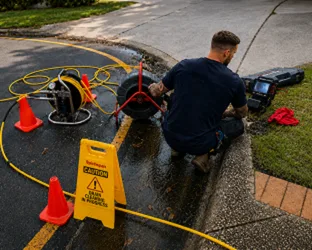
Isolate and contain before anything else, then diagnose properly and put a fixed number in front of you.

Repaired on the spot where possible, tested before we go, and the site left clean rather than mid-job.
Call and describe it. If it can hold, we will tell you, and book you at daytime rates. If it cannot, you will be glad you rang tonight.
Phone is quickest at night. The form works too and reaches the crew covering Kirrawee rather than a national call centre.

Leave your details and our local Kirrawee team will call you back fast.